

November is National Child Safety and Protection Month, and this month we turn out spotlight on Dr. Mimi Graham, whose work has helped transform how courts and child welfare systems respond to infants and young children who have experienced abuse, neglect, and trauma.
For more than three decades, Dr. Graham has been a leader in infant mental health and early childhood development. As director of Florida State University’s Center for Prevention and Early Intervention Policy, she has worked to bring research about childhood trauma into the systems responsible for protecting vulnerable children. Among her most significant contributions is her leadership in advancing efforts to institute Florida’s Early Childhood Courts, often called “baby courts.”
Don’t worry. Baby courts are not courtrooms where babies appear before judges. They are specialized programs within a court system that recognize that even the youngest children can be deeply affected by trauma, separation, and disruptions in their relationships with caregivers.
Research shows that the period from birth to age three is one of the most critical stages of human development. According to Harvard University’s Center on the Developing Child, more than one million new neural connections form every second during the first few years of life. During this time, children’s experiences and relationships help shape the foundations for future learning, emotional well-being, behavior, and health.
This understanding is central to the baby court approach. Traditional child welfare proceedings often concentrate on legal questions surrounding custody, parental rights, and whether a child can safely return home. Baby courts address these issues, while also considering the emotional and developmental needs of infants and toddlers. Judges work with teams of mental health professionals, child welfare specialists, attorneys, and community organizations to help families address the circumstances that brought them into the system. For example, instead of assigning an offender who is a parent of a young child with generic community service hours, a baby court judge might offer the offending parent participation in Child Parent Therapy to address the two-generational trauma.
A central goal is to strengthen the relationship between young children and their parents or caregivers whenever it is safe to do so. Families may receive specialized mental health treatment, parenting support, and other services designed to address trauma and create safer, more stable homes. Cases are reviewed frequently, allowing the court and service providers to respond to the family’s progress and changing needs. Special outreach is provided to engage fathers to connect with their young child.
Dr. Graham and her colleagues at Florida State University have been instrumental in bringing this approach to courts throughout Florida. Their work has included educating judges and child welfare professionals about early childhood development, developing training programs, and helping court teams incorporate trauma-informed practices into their decisions.
According to Florida State University, children participating in Early Childhood Court are more likely to be reunified with their families than children whose cases are handled through traditional court proceedings. Florida’s initiative has grown from a handful of sites in 2014 to more than 35 locations across the state.
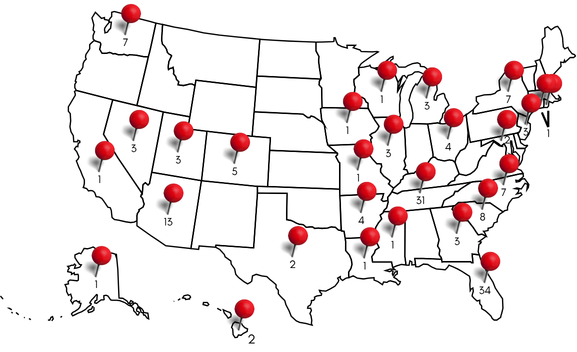
The baby court movement has also expanded well beyond Florida. According to ZERO TO THREE, more than 150 Safe Babies sites were operating across 31 states in 2025, reflecting growing recognition that infants and toddlers involved in the child welfare system need specialized, trauma-informed support (see our map). Florida has been an important part of that expansion, with Dr. Graham helping to advance the approach throughout the state.
Dr. Graham’s contributions extend beyond the courtroom. She has helped develop the widely used Partners for a Healthy Baby curriculum, which supports professionals working with expectant parents and families with young children. She also co-founded the Florida Association for Infant Mental Health and has championed programs that help professionals recognize and respond to the effects of childhood trauma. Her latest work supports trauma responsive court practices through an online trauma course for the entire judicial workforce (https://www.cpeip.org/trauma-resilience-court).
Dr. Graham’s work is particularly meaningful to us here at Child Find of America because she recognizes that protecting children involves more than removing them from immediate danger. She understands how early experiences shapes development and that supporting healthy relationships and helping families address the underlying circumstances that place children at risk are key to long-lasting success.
At Child Find of America, we see the lasting effects that family conflict, abduction, and trauma can have on children. Dr. Graham’s work reinforces an important principle that guides our own services: ensuring a child’s immediate safety is essential and helping that child and family achieve lasting stability and well-being is equally important.
During National Child Safety and Protection Month, we are pleased to recognize Dr. Mimi Graham for her decades of leadership and her commitment to ensuring that even our youngest and most vulnerable children receive the protection, understanding, and support they deserve.